Few genres captivate and challenge audiences quite like horror. From the adrenaline-pumping jump scares to the creeping psychological dread, a erfolgreicher horrorfilm (successful horror film) taps into our deepest fears, offering a cathartic experience that keeps viewers coming back for more. But what exactly defines success in this often-misunderstood genre? Is it the sheer terror it evokes, its critical acclaim, or its ability to smash box office records? The answer, as with many things in the world of cinema, is a complex blend of all these factors.
Horror has been a foundational element of filmmaking since its inception, evolving dramatically from early silent classics to today's diverse subgenres. This article will delve into the multifaceted nature of what makes a horror film truly successful, exploring its commercial triumphs, its artistic innovations, and its enduring cultural impact.
The Enduring Allure of Fear: What Makes a Horror Film Resonate?
The appeal of horror is deeply rooted in human psychology. Watching a terrifying film allows us to confront our anxieties in a safe, controlled environment. It’s a primal experience, a chance to feel the rush of adrenaline without real danger, offering a form of emotional catharsis. This fundamental connection to fear is what makes a horror film, especially an erfolgreicher horrorfilm, universally understood, even across cultures.
Beyond the simple thrill, successful horror films often serve as powerful cultural mirrors, reflecting and exploring societal anxieties. Early works like Nosferatu and Frankenstein grappled with themes of illness, the unknown, and humanity's hubris, embodying the fears of their respective eras. As society evolved, so too did its monsters and metaphors. Films like The Omen and Carrie in the 1970s tapped into religious and social tensions, while later films would explore everything from technological dread to the anxieties of isolation and loss of control.
The genre's remarkable adaptability is a key factor in its consistent success. Whether through psychological torment, visceral gore, or existential dread, the core objective remains the same: to unsettle and provoke. The most enduring horror films don't just scare you in the moment; they linger, planting seeds of doubt and unease that resonate long after the credits roll. This capacity to create lasting impact is a hallmark of any truly erfolgreicher horrorfilm.
Commercial Triumphs: Box Office Giants and Genre-Defining Blockbusters
When discussing an erfolgreicher horrorfilm, commercial success is often the most straightforward metric. While critical acclaim and cultural impact are crucial, a film's ability to draw millions to cinemas worldwide undeniably marks it as a powerhouse. The horror genre, despite often being made on relatively modest budgets, has a remarkable track record of delivering astronomical returns.
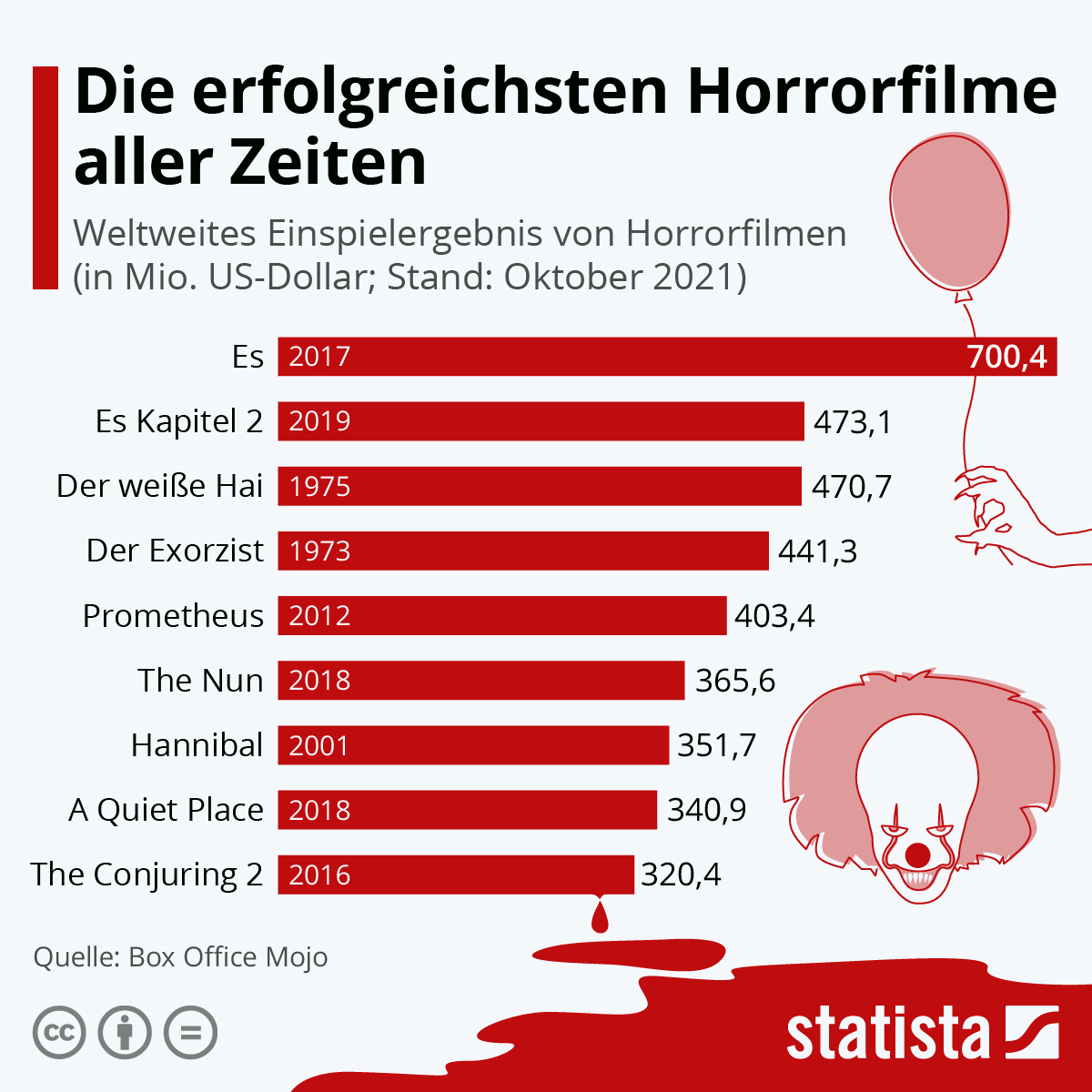
Take, for instance, the recent phenomenon of Stephen King adaptations. The cinematic universe of Pennywise the Grinning Clown has proven to be a massive draw. IT Chapter Two, for example, achieved a staggering box office gross of $473.1 million worldwide, solidifying its place as one of the highest-earning horror films ever. This success demonstrates the enduring power of compelling storytelling combined with terrifying creature design.
However, the concept of a "horror film" for rankings can sometimes be a point of debate. Reputable sources like Box Office Mojo and Wikipedia are typically used to categorize films strictly within the horror genre for definitive lists. This ensures that films often debated as borderline, such as the psychological thriller The Sixth Sense or the action-heavy Godzilla franchise, are excluded, keeping the focus purely on genuine horror entries. This strict classification helps in identifying truly successful horror films based on their genre-specific appeal.
Beyond modern blockbusters, the genre boasts timeless classics that continue to rake in impressive figures decades later. The 1975 masterpiece Jaws, often credited with inventing the summer blockbuster, sits comfortably among the top-grossing horror films, showcasing how a well-crafted creature feature can transcend its genre to become a global phenomenon. Even older films continue to prove their commercial staying power; The Exorcist, released in 1973, is poised to celebrate its 50th anniversary next year, and its impact on both cinema and popular culture remains undeniable, continuing to be a benchmark for intense, atmospheric horror that has enjoyed multiple re-releases and continued revenue streams. This longevity speaks volumes about what makes an erfolgreicher horrorfilm truly great: a blend of initial impact and timeless quality.
Crafting Masterpieces: Cinematic Innovations and Lasting Legacies
Beyond box office numbers, the true legacy of an erfolgreicher horrorfilm often lies in its artistic innovation and its lasting influence on the genre. These are the films that redefine cinematic language, push boundaries, and inspire generations of filmmakers and horror enthusiasts alike.
Alfred Hitchcock's Psycho (1960) stands as a towering example. This film wasn't about supernatural monsters but about the monster within, expertly weaving psychological terror through meticulous observation and a relentless build-up of nervousness. Hitchcock’s precise direction, utilizing every camera angle, pause, and sound cue, created a chilling atmosphere that seeped under the audience's skin. Anthony Perkins' unforgettable portrayal of Norman Bates transformed the landscape of psychological horror, proving that fear could be profoundly effective without a drop of blood or a jump scare. It's a film that permanently altered the genre, demonstrating how cerebral horror could be incredibly successful.
Similarly, The Exorcist (1973) is widely regarded as a watershed moment in horror cinema. William Friedkin's approach was almost documentarian, taking his time to establish the mundane normalcy of life before the insidious evil takes hold. Its power wasn't derived from rapid-fire shocks but from an overwhelming sense of creeping dread and the unavoidable approach of the horrific. Linda Blair's and Ellen Burstyn's intense performances grounded the film, making the supernatural terror feel chillingly real. It’s an atmospheric masterpiece that stays with you, a true reference point for films that aim for deep, psychological impact rather than mere sensationalism. Its approach to storytelling, focusing on profound human and spiritual struggles, solidified its status as a critically acclaimed and enduringly erfolgreicher horrorfilm.
The evolution of horror showcases this constant innovation. From the gothic dread of Nosferatu and Frankenstein, which used the uncanny to address profound human anxieties, the genre diversified. We saw the rise of body horror and concentrated threats in films like Alien, the explosion of slasher films in the 70s and 80s with franchises like Friday the 13th and A Nightmare on Elm Street, and parallel developments in quieter, more psychological narratives such as Don't Look Now. Modern productions like It Follows, The Babadook, and Midsommar continue this tradition, reinterpreting classic motifs for contemporary social contexts, proving that the genre is as vital and adaptable as ever. For more insights into what makes a true masterpiece, you might be interested in delving deeper into specific genre evolutions, which we explore in erfolgreicher horrorfilm - Article 2.
Beyond the Scream: The Cultural Influence of Successful Horror
The mark of a truly erfolgreicher horrorfilm extends far beyond its initial release, embedding itself into the collective cultural consciousness. These films don't just entertain; they shape conversations, inspire Halloween costumes, and create iconic characters and moments that resonate for generations. Think of the chilling image of Pennywise, the haunting score of Jaws that instilled fear of the ocean, or the unsettling movements of the creature in It Follows. These elements become shorthand for terror, influencing other media, art, and even our everyday language.
The most successful horror films have a unique ability to cross generational divides. A classic like The Exorcist, despite being almost 50 years old, continues to terrify new audiences with its raw power and disturbing themes. Similarly, the psychological depth of Psycho remains a subject of academic study and casual discussion, influencing countless thrillers and horror films that followed. This lasting cultural footprint is a testament to the film's initial quality and its ability to tap into universal fears that transcend time.
Furthermore, an erfolgreicher horrorfilm often sparks discussions about societal issues, challenging norms and exploring taboos. Whether it's the exploration of grief in The Babadook, the examination of cults and isolation in Midsommar, or the metaphorical portrayal of sexual transmission in It Follows, these films use their terrifying narratives to comment on the human condition. They push boundaries, not just of what's scary, but of what's acceptable to discuss openly, acting as cultural barometers. Understanding the audience's evolving tastes is crucial for creating an erfolgreicher horrorfilm today. We discuss modern trends and their impact in erfolgreicher horrorfilm - Article 3.
Conclusion
Ultimately, an erfolgreicher horrorfilm is a multifaceted masterpiece – a potent blend of commercial acumen, critical artistry, and profound cultural resonance. It’s a film that can both top the box office charts and leave an indelible mark on cinematic history. From the primal terror evoked by ancient fears to the psychological complexity of modern anxieties, the genre continues to evolve, reflecting and shaping the world around us. Whether through the shock and awe of a slasher, the slow burn of psychological dread, or the visceral impact of a creature feature, the best horror films connect with audiences on a deep, fundamental level, proving that sometimes, being scared can be one of the most rewarding experiences cinema has to offer.