The Enduring Allure: What Makes a Horror Film Truly Successful?
The silver screen has long been a canvas for our deepest fears, offering a thrilling escape into the shadows where monsters lurk and psychological terrors unfold. But what truly defines an
erfolgreicher horrorfilm – a successful horror film? Is it purely about box office numbers, or does critical acclaim, cultural impact, and a lasting legacy play an equally significant role? This article delves into the multi-faceted nature of horror film success, examining genre titans, historical evolution, and the contemporary factors that push audiences to the edge of their seats and into cinemas.
Horror, as a genre, thrives on adaptation, constantly reinventing itself to tap into the prevailing anxieties of society. From silent-era specters to modern-day psychological thrillers, the most memorable horror films are those that don't just scare us in the moment but linger long after the credits roll, forcing us to confront uncomfortable truths about ourselves and the world around us. Let's explore the key ingredients that forge an
erfolgreicher horrorfilm.
Box Office Titans: The Financial Pulse of Horror Success
When we talk about an
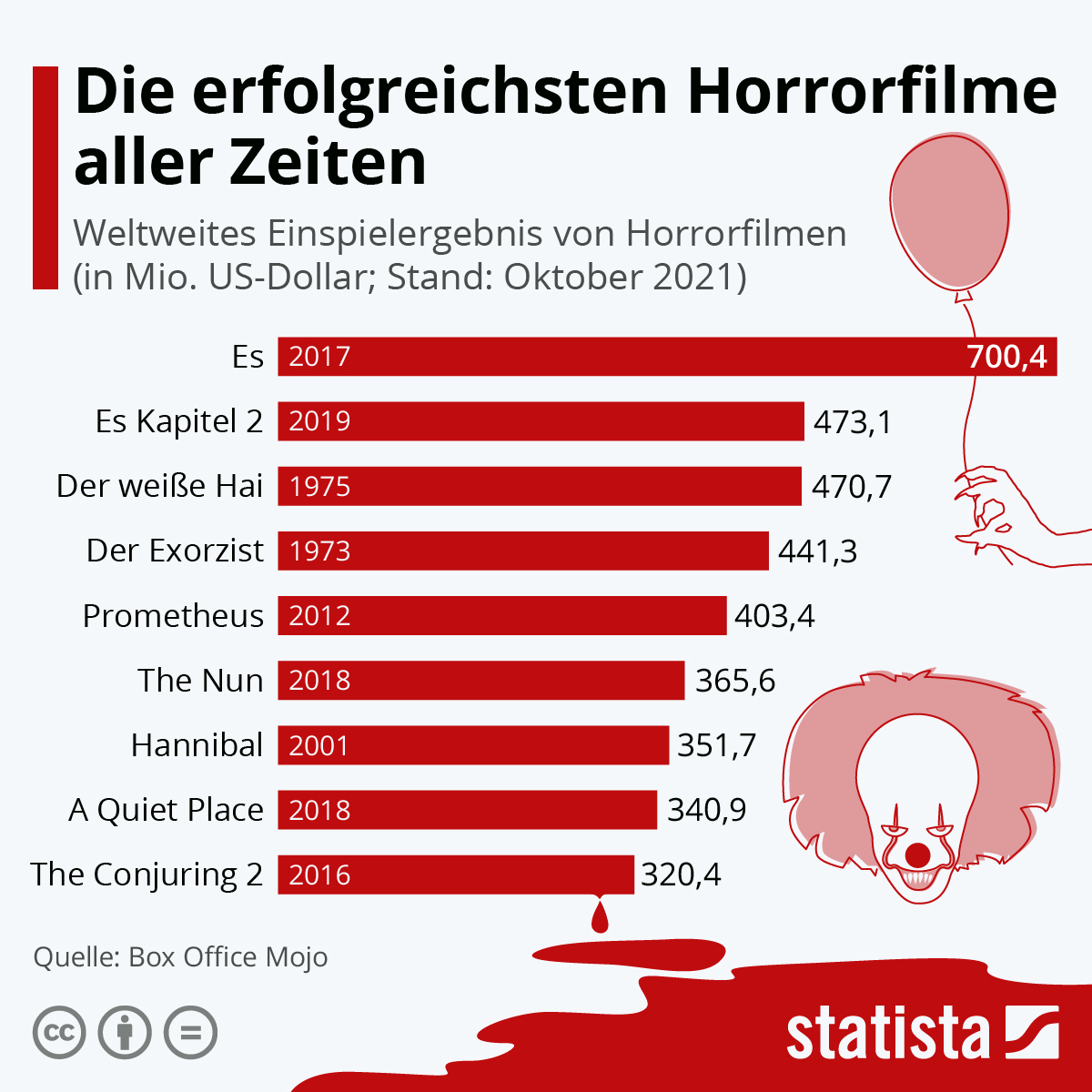
erfolgreicher horrorfilm in purely financial terms, certain titles stand out, proving that fear can be a lucrative business. While official rankings often vary based on what constitutes "horror"—some even include genre-bending hits like *The Sixth Sense* or elements of the *Godzilla* franchise—definitive lists, such as the one compiled using data from Box Office Mojo and Wikipedia, provide a clear picture.
One of the most remarkable recent examples of a commercially successful horror film is *IT Chapter Two*. This second installment in the Stephen King adaptation, featuring the terrifying Pennywise the Clown, cemented its place as one of the highest-grossing horror films, raking in an impressive 473.1 million US dollars worldwide. Its predecessor also achieved monumental success, showcasing the enduring appeal of well-crafted adaptations and compelling villains.
Beyond modern blockbusters, classics consistently prove their worth. Take Steven Spielberg's 1975 masterpiece, *Der Weiße Hai* (Jaws), which is often credited not just as a horror film, but as the blueprint for the summer blockbuster. Its gripping suspense and iconic score ensured its place among the most successful films of all time, frightening a generation out of the water. Another enduring legend is *Der Exorzist* (The Exorcist) from 1973. This film, which will celebrate its 50th anniversary soon, not only terrified audiences upon its release but remains a benchmark for supernatural horror, proving that a truly effective horror film can transcend time and cultural shifts, maintaining its power to disturb and provoke. The longevity and continuous re-evaluation of such films underscore that box office performance, while important, is only one measure of an
erfolgreicher horrorfilm.
From Primal Screams to Psychological Scars: The Evolution of Horror
The journey of horror cinema is a fascinating one, mirroring humanity's evolving fears and anxieties. An
erfolgreicher horrorfilm throughout history has always managed to tap into the collective subconscious of its era. The genre is one of the oldest in film, with early works like F.W. Murnau's *Nosferatu* (1922) and James Whale's *Frankenstein* (1931) utilizing the uncanny to give form to societal anxieties surrounding disease, control, and the unknown. These pioneers laid the groundwork for horror's narrative power, demonstrating that fear was not merely an end in itself but a potent tool for exploring deeper themes.
As decades passed, horror diversified. The mid-20th century saw films like Alfred Hitchcock's *Psycho* (1960) redefine psychological horror. *Psycho* operates not through monsters but through meticulous observation and nail-biting suspense. Hitchcock’s precision in building tension through glances, pauses, and sounds, coupled with Anthony Perkins' unforgettable portrayal of Norman Bates, demonstrated how horror could penetrate the psyche without relying on the supernatural or excessive gore. It was a film that permanently altered the genre's landscape, proving that true terror could reside within the human mind.
The 1970s and 80s brought further transformations. Films like *The Omen* and *Carrie* channeled religious and social tensions, while *Alien* and *Jaws* introduced a new, concentrated form of physical threat, often confined to limited spaces, amplifying the sense of claustrophobia and helplessness. This era also gave rise to the slasher and exploitation genres with films like *Friday the 13th* and *A Nightmare on Elm Street*, offering direct, visceral scares. Yet, parallel to this, quieter, more psychologically nuanced films such as *Don’t Look Now* and *The Changeling* emerged, reminding audiences that fear could be just as effective without blood and loud jumpscares. This ongoing tension between immediate shock and slow-burn dread continues to define what makes an
erfolgreicher horrorfilm even today.
Beyond Jump Scares: How Modern Horror Finds Success
The landscape of what constitutes an
erfolgreicher horrorfilm continues to evolve, with modern productions showcasing an incredible range of approaches. Today's most successful horror films often combine compelling storytelling with a keen eye for contemporary social commentary, proving that the genre is far from creatively stagnant. Films like *It Follows*, *The Babadook*, and *Midsommar* skillfully revisit classic horror motifs—stalkers, grief, cults—and embed them within new social contexts, reflecting current anxieties around mental health, trauma, and societal isolation. These films don't just aim for cheap scares; they aim for lasting emotional and psychological impact.
A critical factor in the success of modern horror is its ability to resonate on a deeper level, transforming simple fear into thought-provoking narratives. This often involves innovative storytelling, strong character development, and a willingness to explore uncomfortable truths. Furthermore, the digital age has introduced new avenues for success. While the specific details for the film *Smile* aren't available, its reported success, partly attributed to platforms like TikTok, highlights the growing power of viral marketing and social media in amplifying a film's reach. A clever marketing campaign, combined with genuine buzz from viewers, can propel an independent horror film into mainstream consciousness, proving that an
erfolgreicher horrorfilm can be cultivated through organic word-of-mouth and clever engagement strategies. This democratization of promotion allows films that might not have massive marketing budgets to still achieve significant cultural and financial success.
Crafting Your Own Successful Horror Experience
Whether you're a filmmaker aspiring to create the next big hit or a fan searching for the ultimate scare, understanding the elements that forge an
erfolgreicher horrorfilm is key. For creators, it involves a delicate balance of originality, a deep understanding of human psychology, and the courage to push boundaries. A strong narrative, well-developed characters, and a clear vision of the fear you aim to evoke are paramount. It’s not just about what frightens people, but *why* it frightens them.
For horror enthusiasts, embracing the genre's diversity is a rewarding experience. Don't limit yourself to just one subgenre; explore the chilling depths of psychological horror, the visceral thrills of slashers, the cosmic dread of lovecraftian tales, or the ethereal scares of supernatural narratives. Watching classics like *Psycho* or *The Exorcist* can provide a foundational understanding of how masterful tension and atmosphere are built. Engaging with international horror also opens doors to new perspectives and unique storytelling traditions. Ultimately, a truly successful horror experience, for both creator and audience, is one that leaves a lasting impression—a film that challenges, entertains, and profoundly disturbs, demonstrating the timeless power of fear in storytelling. For more insights into the horror genre, check out
erfolgreicher horrorfilm - Article 3.
In conclusion, an
erfolgreicher horrorfilm is a multifaceted entity, defined by more than just its box office gross. While financial triumph certainly plays a role, true success in the horror genre encompasses its ability to captivate audiences, reflect societal anxieties, adapt through historical eras, and leave an indelible mark on cinematic culture. From the groundbreaking practical effects of *Der Exorzist* to the clever psychological games of modern indies, horror films continue to prove their enduring appeal by evolving with our fears, ensuring that the thrill of the scare will always find a captivated audience.